How to Create LinkedIn Content as a UX Designers: Complete 2026 Guide
A step-by-step guide covering everything UX Designersneed to know about creating consistent, high-quality LinkedIn content — from finding ideas to posting your first carousel.
If you’re a ux designer who knows LinkedIn matters but never quite gets around to posting, this guide is for you. The timing has rarely been better: most people in your field either stay silent or recycle the same generic updates, which leaves a wide-open lane for anyone willing to teach honestly and share what actually works. LinkedIn is where hiring managers, PMs, and founders who value design gather, so process-driven content reaches the people who hire and promote designers. Its format is ideal for showing the reasoning behind the pixels — the thing portfolios hide. That gap is the opportunity — the ux designerwho publishes specific, useful content becomes the name people remember, refer, and reach out to, while equally capable peers stay invisible. You already have the expertise; what’s missing is a repeatable process for turning it into posts without sacrificing your actual work. That’s exactly what the seven steps below give you, along with the post ideas, content pillars, and hashtags to start with today.
Time to first post with CarouseLabs: About 20 minutes including onboarding — most designers turn one design decision into a first carousel the same day.
What Content Creation Looks Like for UX Designers
The Old Way
Before CarouseLabs, UX designers faced a painful bind: your feed is judged as a portfolio, but design work drained the exact creative energy needed to produce personal content. So your presence went quiet or looked rushed — a credibility problem for someone selling design craft. The reasoning behind your work, the thing that separates a designer from a decorator, stayed invisible in Figma files and internal reviews. Meanwhile the senior roles and clients went to designers who'd made their thinking visible, and your genuine strategic depth stayed hidden behind pretty screens nobody saw.
The CarouseLabs Way
With CarouseLabs, your feed becomes the portfolio piece it should be. A design decision becomes a reasoning carousel that proves you think strategically. A reframe signals depth beyond aesthetics. Your principle becomes a carousel whose own craft demonstrates your skill. Your design-as-business-value takes earn you a seat at the table. Because you batch a week in one session, building your presence doesn't drain the creative energy your real work needs — and your flawlessly designed feed does more selling than any case study, proving you can actually do the thing you claim.
Step-by-Step: How to Create LinkedIn Content as a UX Designers
- 1
Define the design problem you want known for solving
UX spans research, interaction design, systems, and strategy — so pick your focus and anchor your content to it. Whether you're building toward senior roles, freelance clients, or industry standing, a clear specialty makes you memorable. And crucially, as a designer, your content is a live demonstration of your craft, so a well-designed, thoughtful feed is worth more than any portfolio link in proving you can actually do the work.
20 min, onceCarouseLabs Tip: CarouseLabs keeps your content focused on your design specialty, so your feed builds a memorable identity in a crowded field.
- 2
Turn design decisions into reasoning content
Your value isn't pretty screens — it's the reasoning behind them. Keep a note of the design decisions you make and why: the research insight that changed a flow, the trade-off you navigated, the pattern you rejected. Showing your thinking, not just your output, is what separates a designer from a decorator. It's exactly the depth that gets designers hired into senior roles where influence and judgment matter more than pixel-pushing.
10 min per decisionCarouseLabs Tip: CarouseLabs turns a design decision into a reasoning carousel, so your thinking — not just your visuals — becomes visible proof of your level.
- 3
Write hooks that reframe how people see design
UX hooks land when they challenge a common misunderstanding: 'Your users aren't confused by your UI. They're confused by your product's model of the world.' Reframing a design problem at a deeper level signals strategic thinking and separates you from designers who only talk about aesthetics. This attracts the product leaders and founders who need a designer who thinks systemically, not just someone to make things look nice.
10 minCarouseLabs Tip: CarouseLabs generates hooks that reframe design problems, so your posts signal strategic depth rather than surface aesthetics.
- 4
Build a carousel that teaches a design principle
Structure a carousel around one principle: how to run useful research on a budget, why a pattern fails, how to design for the unhappy path. Walk through the problem, the common mistake, your principle, how to apply it, and the outcome. Teaching design thinking demonstrates your substance and — because you're a designer — the carousel's own craft doubles as proof of your ability. The medium is the portfolio.
20 minCarouseLabs Tip: CarouseLabs builds the full design-principle carousel from your notes — and its own craft demonstrates the skill you're teaching.
- 5
Advocate for users and the value of design
Design is chronically under-valued in many organizations, and being the voice who articulates its business worth — retention, conversion, trust, reduced support cost — is a powerful angle. Share content that makes the case for design as a business driver, not decoration. This positions you as a strategic partner rather than a service function, which is exactly the framing that earns designers a seat at the table and better opportunities.
10 minCarouseLabs Tip: CarouseLabs helps you shape design-as-business-value takes into posts, so your feed elevates design from decoration to strategy.
- 6
Post consistently without draining your creative energy
Design work is creatively demanding, so producing personal content on top of it is easy to abandon. Batch a week of posts in one session so your visibility holds without draining the creative energy your client or product work needs. Consistency compounds into the reputation that opens senior roles, freelance clients, and speaking — while equally talented but invisible designers watch those opportunities go to peers who simply showed up.
50 min for a weekCarouseLabs Tip: CarouseLabs lets you batch a week at once, so building your presence doesn't drain the creative energy your design work needs.
- 7
Make your feed a flawless demonstration of your craft
You're a designer — your feed's visual quality is judged mercilessly and is your most direct proof of ability. A polished, distinctive, perfectly consistent visual identity is itself your strongest portfolio piece. Lock in a considered template once so every reasoning and principle carousel exemplifies your craft. For a UX designer, a beautifully executed feed does more selling than any case study, because it proves you can actually do the thing you claim.
15 min first time, automatic afterCarouseLabs Tip: Upload one reference and CarouseLabs keeps every carousel flawlessly designed, so your feed becomes your strongest portfolio piece.
What UX Designers Achieve in Their First Week with CarouseLabs
Your first reasoning carousel that proves you're a strategic designer, not a decorator.
A flawlessly designed feed that becomes your strongest portfolio piece.
Your first senior role or client enquiry from finally making your design thinking visible.
The 5 Topics UX Designers Should Build Their Content Around
The hardest part of posting consistently isn’t writing — it’s deciding what to write about every single time. Content pillars solve that. Instead of starting from a blank page, you rotate through a small set of themes you’ve already committed to, so every post has a home before you write a word. These five pillars are the ones that work for UX Designers specifically: together they balance teaching, credibility, and personality, which is the mix that grows an audience rather than just filling a feed. Pick one pillar per post and rotate through them over a fortnight. You’ll never run dry, your audience will know what to expect from you, and your feed will build a coherent reputation instead of reading as scattered thoughts.
- 1
Research & Insight — running research that actually changes the product
- 2
Process & Craft — critiques, usability testing, and a design process that works
- 3
Influence & Advocacy — championing users while staying a trusted partner
- 4
Usability Principles — the recurring mistakes and truths behind good UX
- 5
UX Career — the lessons and growth that come from years in the field
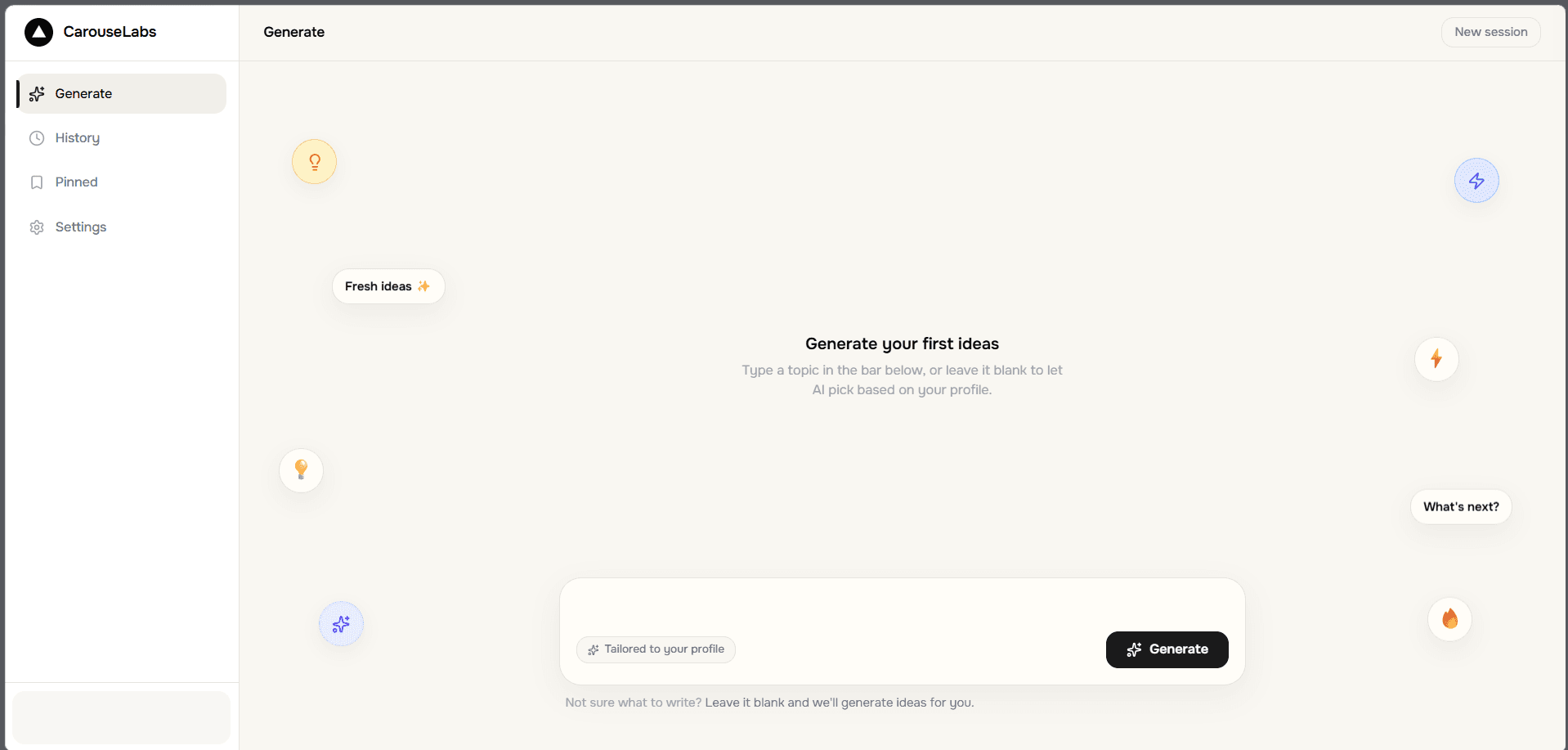
10 LinkedIn Post Ideas to Get You Started as a UX Designers
Hashtags UX Designers Should Use
Ready to Create Your First Post as a UX Designers?
Stop spending hours on content. CarouseLabs handles the ideas, captions, and visuals — you just hit publish.
Start creating for freeNo credit card required
Related Resources for UX Designers
Guides for related niches