How to Create LinkedIn Content as a Therapists: Complete 2026 Guide
A step-by-step guide covering everything Therapistsneed to know about creating consistent, high-quality LinkedIn content — from finding ideas to posting your first carousel.
If you’re a therapist who knows LinkedIn matters but never quite gets around to posting, this guide is for you. The timing has rarely been better: most people in your field either stay silent or recycle the same generic updates, which leaves a wide-open lane for anyone willing to teach honestly and share what actually works. LinkedIn is full of professionals curious about growth and mental health but unsure where to start, making it a respectful place for psychoeducation. Its thoughtful format suits the ethical, non-salesy content that fills a practice with well-fit clients. That gap is the opportunity — the therapistwho publishes specific, useful content becomes the name people remember, refer, and reach out to, while equally capable peers stay invisible. You already have the expertise; what’s missing is a repeatable process for turning it into posts without sacrificing your actual work. That’s exactly what the seven steps below give you, along with the post ideas, content pillars, and hashtags to start with today.
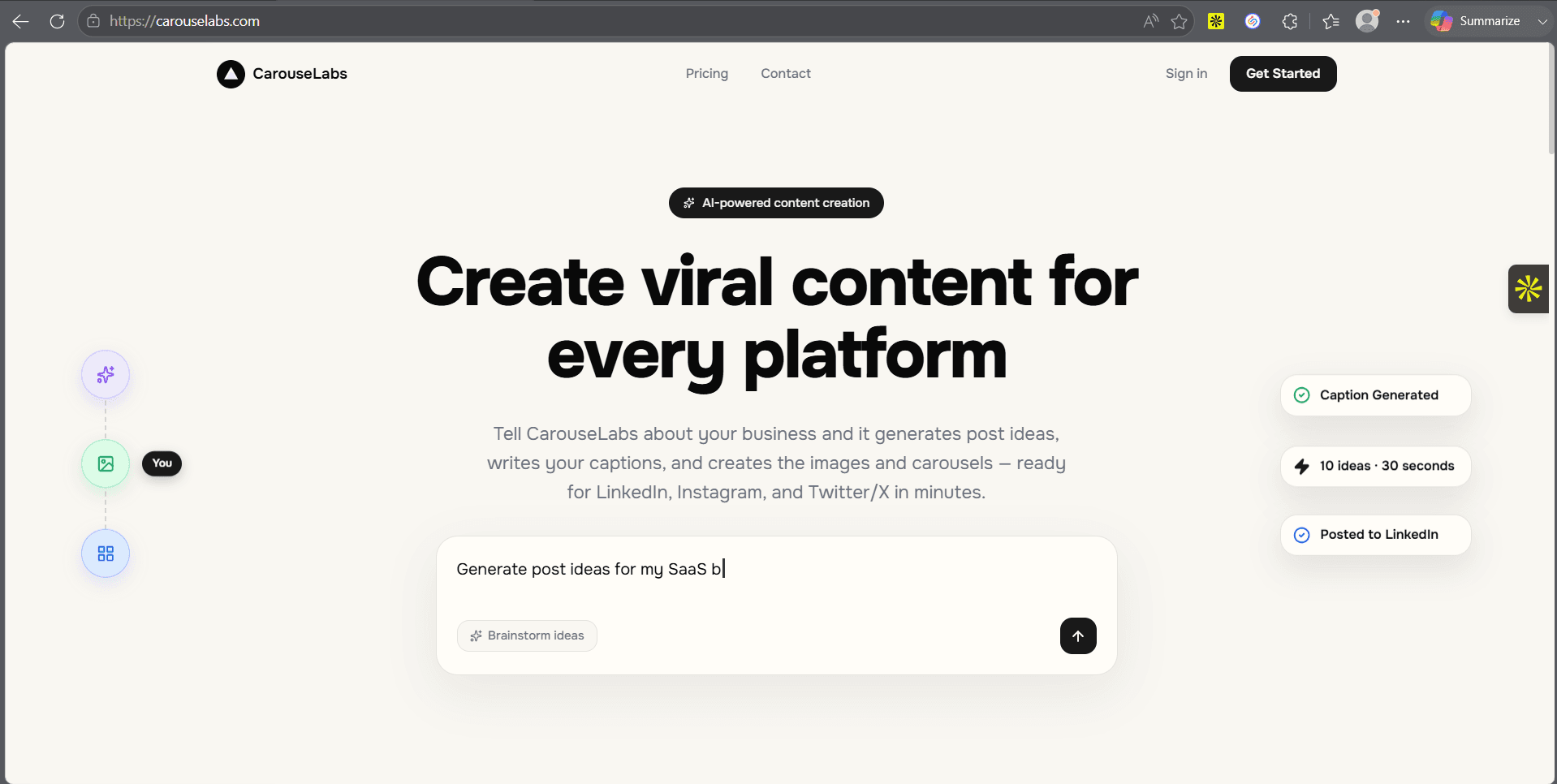
Time to first post with CarouseLabs: About 20 minutes including onboarding — most therapists turn one general clinical concept into a first psychoeducation carousel the same day.
What Content Creation Looks Like for Therapists
The Old Way
Before CarouseLabs, therapists watched imprecise self-help content shape how the public understands mental health, while their own clinical knowledge stayed entirely private. Emotionally demanding caseloads left no capacity to create, and ethical caution made many therapists avoid posting at all rather than risk a boundary. So the psychoeducation that could have helped thousands understand themselves never got written, stigma went unchallenged, and people who needed therapy stayed stuck behind misconceptions your expertise could have dissolved.
The CarouseLabs Way
With CarouseLabs, your clinical knowledge reaches the public safely. A general concept becomes psychoeducation that helps people understand themselves — never touching client material. A hook names an experience with clinical accuracy that self-help content lacks. Your demystifying content lowers a real barrier to seeking help. Because the content is educational rather than case-based, your ethical frame stays intact — and because you batch a week in one session, visibility never depletes the emotional capacity your clients need from you.
Step-by-Step: How to Create LinkedIn Content as a Therapists
- 1
Ground your content in your ethical obligations first
Confidentiality is absolute, so before creating anything, establish your rules: never a client story, never an identifiable detail, no advice that mimics treatment, clear signposting to crisis support. Check your professional body's social media guidance. This isn't a limitation on your content — it's the foundation. Therapists who post from a clear ethical frame create confidently and sustainably, because they're never risking the trust their practice depends on.
30 min, onceCarouseLabs Tip: CarouseLabs drafts general, educational psychoeducation content rather than case material, so your posts stay within your ethical obligations.
- 2
Teach psychoeducation, never client stories
Your content should draw on general clinical knowledge and the literature — not your caseload. Keep a note of the concepts you find yourself explaining generally: how anxiety maintains itself, what trauma does to the nervous system, why avoidance backfires. This psychoeducation is enormously valuable to the public and completely safe ethically, because it teaches the framework rather than exposing anyone's private material.
10 min per conceptCarouseLabs Tip: CarouseLabs turns a general clinical concept into a psychoeducation carousel, so your expertise reaches people without touching client material.
- 3
Write hooks that name an experience with clinical accuracy
Therapy hooks land when they name something precisely: 'Anxiety isn't the fear itself. It's the fear of the fear — and that's why avoidance makes it worse.' Clinical accuracy delivered warmly creates powerful recognition in someone struggling without language for their experience. Because self-help content is often imprecise, a therapist's precision is both a genuine public service and a clear signal of your professional depth.
10 minCarouseLabs Tip: CarouseLabs generates clinically accurate, warm hooks, so your posts name experiences precisely without straying into personal advice.
- 4
Build a carousel that explains one psychological concept
Structure a carousel around one concept: the window of tolerance, how the nervous system responds to threat, why perfectionism is often fear. Walk through the misconception, the mechanism, what it means, and where to get support. Explaining psychological concepts clearly is profoundly useful — it helps people understand themselves, reduces shame, and demonstrates your expertise without ever approaching the boundary of treating someone through a post.
20 minCarouseLabs Tip: CarouseLabs builds the full psychoeducation carousel from your notes, so complex psychology becomes clear and safe public content.
- 5
Reduce stigma and normalize seeking help
Many people never seek therapy because of shame or misconceptions about what it is. Content that demystifies therapy — what actually happens, who it's for, why it's not just for crises — is genuinely valuable and reduces a real barrier. Being the therapist who makes the process feel understandable and non-threatening helps people take a step they might have avoided for years, which is meaningful work whether or not they come to you.
10 minCarouseLabs Tip: CarouseLabs helps you shape stigma-reducing, demystifying content, so your feed lowers a real barrier to people seeking help.
- 6
Stay present without it draining your clinical capacity
Therapeutic work is emotionally demanding, and you must protect your own capacity — content should never come at the cost of your presence with clients. Batch a week of posts in one session so your visibility holds without depleting you. Sustainable content practice models the boundaries you'd encourage in anyone else, and it keeps your practice visible to people slowly gathering courage to reach out.
50 min for a weekCarouseLabs Tip: CarouseLabs lets you batch a week at once, so building visibility never depletes the emotional capacity your clients need from you.
- 7
Create a calm, professional, safe visual presence
Your visual identity should feel calm, professional, and safe — reassuring someone who may be anxious about reaching out. A consistent, warm-but-professional look signals that you're a qualified, steady presence. Lock in your template once so every psychoeducation carousel carries the same reassuring polish. For someone deciding whether to seek help, a feed that feels safe and credible can be the difference between reaching out and staying stuck.
15 min first time, automatic afterCarouseLabs Tip: Upload one reference and CarouseLabs keeps every carousel calm and professional, so your feed feels safe to someone anxious about reaching out.
What Therapists Achieve in Their First Week with CarouseLabs
Your first psychoeducation carousel that helps people understand themselves — safely, with no client material.
A stigma-reducing post that lowers a real barrier for someone who'd avoided therapy for years.
A sustainable content practice that builds visibility without depleting your clinical capacity.
The 5 Topics Therapists Should Build Their Content Around
The hardest part of posting consistently isn’t writing — it’s deciding what to write about every single time. Content pillars solve that. Instead of starting from a blank page, you rotate through a small set of themes you’ve already committed to, so every post has a home before you write a word. These five pillars are the ones that work for Therapists specifically: together they balance teaching, credibility, and personality, which is the mix that grows an audience rather than just filling a feed. Pick one pillar per post and rotate through them over a fortnight. You’ll never run dry, your audience will know what to expect from you, and your feed will build a coherent reputation instead of reading as scattered thoughts.
- 1
Understanding Therapy — demystifying what therapy is and what to expect
- 2
Mental Health Education — helping people understand anxiety, depression, and the mind
- 3
Stigma & Access — breaking down the barriers that keep people from help
- 4
Supporting Others — how to show up for loved ones in their mental health journey
- 5
The Therapeutic Perspective — professional insights on healing and the mind
10 LinkedIn Post Ideas to Get You Started as a Therapists
Ready to Create Your First Post as a Therapists?
Stop spending hours on content. CarouseLabs handles the ideas, captions, and visuals — you just hit publish.
Start creating for freeNo credit card required
Related Resources for Therapists
Guides for related niches