How to Create LinkedIn Content as a Psychologists: Complete 2026 Guide
A step-by-step guide covering everything Psychologistsneed to know about creating consistent, high-quality LinkedIn content — from finding ideas to posting your first carousel.
If you’re a psychologist who knows LinkedIn matters but never quite gets around to posting, this guide is for you. The timing has rarely been better: most people in your field either stay silent or recycle the same generic updates, which leaves a wide-open lane for anyone willing to teach honestly and share what actually works. LinkedIn is where curious professionals, journalists, and organizations hungry for credible psychology gather, so accurate content reaches an audience eager for it. Its substance-first culture rewards the rigor that separates real psychology from pop oversimplification. That gap is the opportunity — the psychologistwho publishes specific, useful content becomes the name people remember, refer, and reach out to, while equally capable peers stay invisible. You already have the expertise; what’s missing is a repeatable process for turning it into posts without sacrificing your actual work. That’s exactly what the seven steps below give you, along with the post ideas, content pillars, and hashtags to start with today.
Time to first post with CarouseLabs: About 20 minutes including onboarding — most psychologists turn one concept into an accessible first carousel the same day.
What Content Creation Looks Like for Psychologists
The Old Way
Before CarouseLabs, psychologists watched pop-psychology myths dominate public understanding of their own field while their genuine expertise stayed locked in journals and clinics. Practice and research left no time to write, and translating science accurately for a general audience took real effort. So learning styles, brain myths, and oversimplified trauma claims spread unchallenged, and the public formed its understanding of the mind from people with no training and no accountability. Your rigor was real; the conversation happened without you.
The CarouseLabs Way
With CarouseLabs, real psychological science finally reaches the public. A concept becomes an accessible carousel that keeps its nuance. A myth becomes an evidence-based correction that's both refreshing and shareable. Your modeling of appropriate uncertainty builds deep trust with readers tired of confident oversimplification. Because you batch a week in one session, your evidence-based voice can actually compete with constantly-posting pop-psychology accounts — so real science starts winning some of the attention the myths used to take by default.
Step-by-Step: How to Create LinkedIn Content as a Psychologists
- 1
Establish your ethical and professional frame
As a psychologist you carry both confidentiality obligations and a duty to represent the science accurately. Before posting, get clear: no client material ever, no overclaiming beyond the evidence, appropriate signposting, and alignment with your professional body's guidance. This frame is what lets you contribute confidently to public discourse for years, and it's what distinguishes your voice from the pop-psychology content that plays fast and loose with both ethics and evidence.
30 min, onceCarouseLabs Tip: CarouseLabs drafts evidence-grounded, general content rather than case material, so your posts stay inside your professional obligations.
- 2
Translate real psychological science for the public
You understand the actual evidence in a field where pop psychology thrives on myths — learning styles, left/right brain, oversimplified 'trauma' claims. Keep a note of the concepts and misconceptions worth addressing. Translating genuine psychological science accurately is your highest-value contribution, because the public is drowning in confident misinformation and almost nobody with real expertise is making the science accessible.
10 min per conceptCarouseLabs Tip: CarouseLabs turns psychological science into an accessible carousel, so real evidence competes with the pop-psychology myths dominating feeds.
- 3
Write hooks that correct myths with evidence
Psychology hooks land when they overturn a popular myth with real science: 'Learning styles aren't real. Here's what the evidence actually shows about how people learn.' Because pop psychology is riddled with appealing falsehoods, a psychologist offering evidence-based correction is both refreshing and highly shareable. This positions you as credible signal amid noise and attracts people who want truth over comfortable myths.
10 minCarouseLabs Tip: CarouseLabs generates evidence-based, myth-correcting hooks, so your posts bring real science to a feed dominated by pop-psychology falsehoods.
- 4
Build a carousel that explains the evidence clearly
Structure a carousel around one evidence-based topic: what the research says about habit formation, how memory actually works, why a popular claim doesn't hold up. Walk through the myth, the actual evidence, the nuance, and the practical implication. Making real psychological science accessible without dumbing it down is rare and valuable — it builds enormous credibility and genuinely improves public understanding of your field.
20 minCarouseLabs Tip: CarouseLabs builds the full evidence-based carousel from your notes, so psychological science becomes accessible without losing its nuance.
- 5
Model appropriate uncertainty and nuance
Pop psychology overclaims; good science acknowledges limits. Sharing content that models appropriate uncertainty — 'the evidence suggests, but it's more complicated than the headline' — is both intellectually honest and differentiating. This nuance builds deep trust with thoughtful readers who are tired of confident oversimplification, and it demonstrates the scientific rigor that distinguishes a psychologist from an influencer with opinions about the brain.
10 minCarouseLabs Tip: CarouseLabs helps you shape nuanced, appropriately-hedged content, so your feed models scientific rigor rather than confident oversimplification.
- 6
Stay consistently present to compete with the noise
Pop-psychology accounts post constantly, so sporadic presence means the myths win by default. Batch a week of posts in one session so your evidence-based voice keeps showing up. Consistency is how real science can actually compete for public attention — the qualified voice that shows up reliably eventually becomes the one people trust when they realize the appealing myths didn't hold up.
50 min for a weekCarouseLabs Tip: CarouseLabs lets you batch a week at once, so your evidence-based voice can actually compete with constantly-posting pop-psychology accounts.
- 7
Present with credible, academic-clean visuals
Your visual identity should signal scientific credibility — clean, clear, professional rather than sensational. A consistent, considered look reinforces that you represent real evidence, not clickbait. Lock in your template once so every science-translation carousel carries the same credible polish. In a space where the loudest visuals often carry the worst information, looking rigorous and calm is itself a meaningful signal to discerning readers.
15 min first time, automatic afterCarouseLabs Tip: Upload one reference and CarouseLabs keeps every carousel clean and credible, so your feed signals real science rather than clickbait.
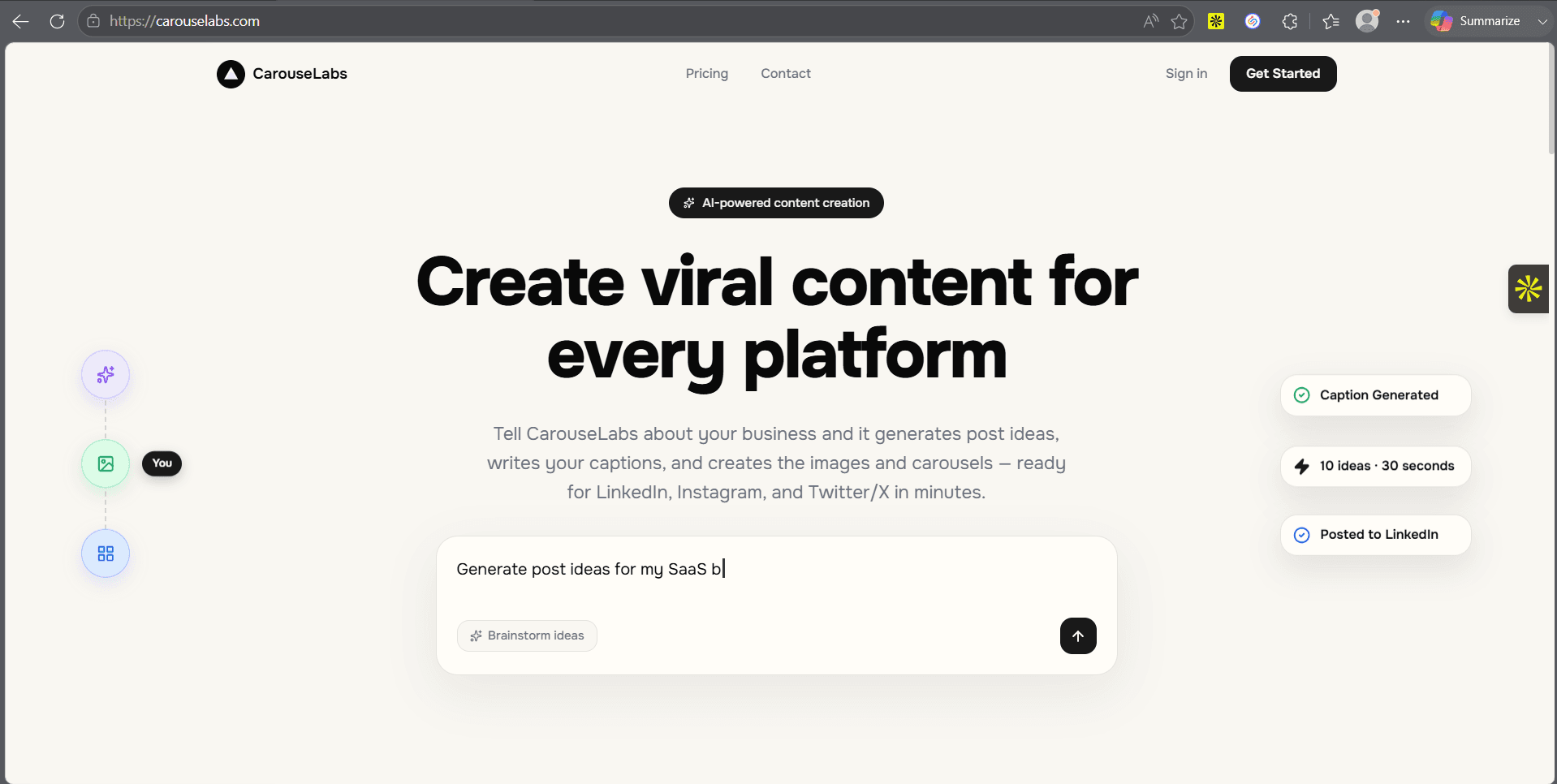
What Psychologists Achieve in Their First Week with CarouseLabs
Your first science-translation carousel that makes real evidence accessible without dumbing it down.
A myth-correcting post that brings rigor to a feed dominated by appealing falsehoods.
Your first reader who says your content changed what they believed about how the mind works.
The 5 Topics Psychologists Should Build Their Content Around
The hardest part of posting consistently isn’t writing — it’s deciding what to write about every single time. Content pillars solve that. Instead of starting from a blank page, you rotate through a small set of themes you’ve already committed to, so every post has a home before you write a word. These five pillars are the ones that work for Psychologists specifically: together they balance teaching, credibility, and personality, which is the mix that grows an audience rather than just filling a feed. Pick one pillar per post and rotate through them over a fortnight. You’ll never run dry, your audience will know what to expect from you, and your feed will build a coherent reputation instead of reading as scattered thoughts.
- 1
Cognitive Biases — the mental shortcuts that quietly shape our decisions
- 2
Behavioral Science — what research actually says about habits, willpower, and motivation
- 3
Everyday Psychology — the science behind procrastination, memory, and behavior
- 4
Applied Insights — turning research into practical understanding
- 5
Science vs. Pop Psychology — separating evidence from the myths
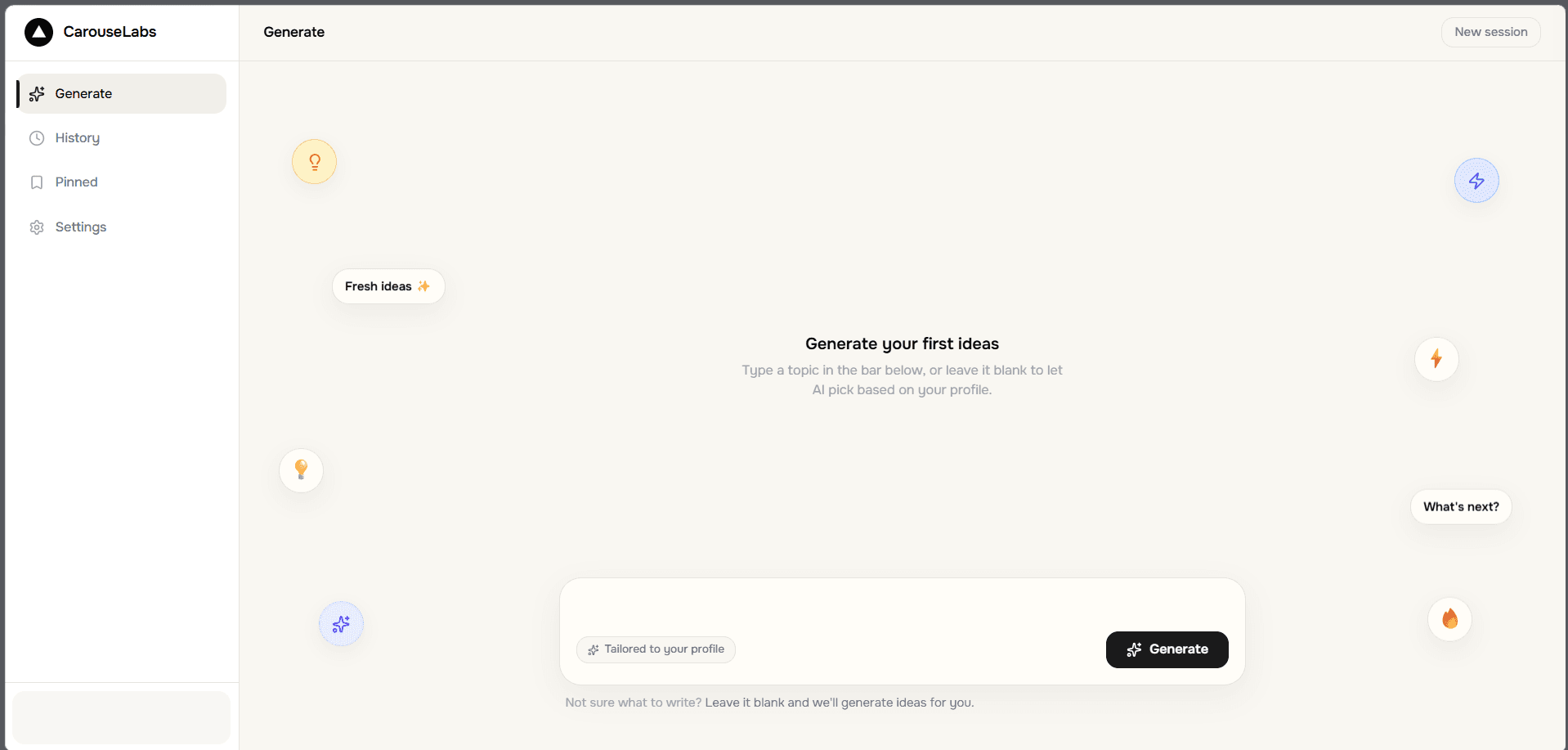
10 LinkedIn Post Ideas to Get You Started as a Psychologists
Ready to Create Your First Post as a Psychologists?
Stop spending hours on content. CarouseLabs handles the ideas, captions, and visuals — you just hit publish.
Start creating for freeNo credit card required
Related Resources for Psychologists
Guides for related niches